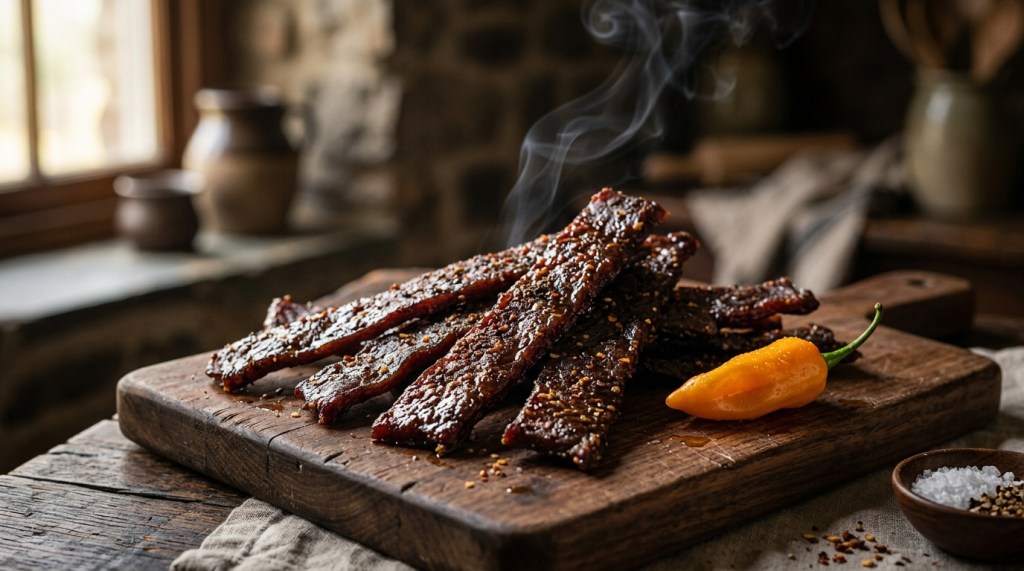
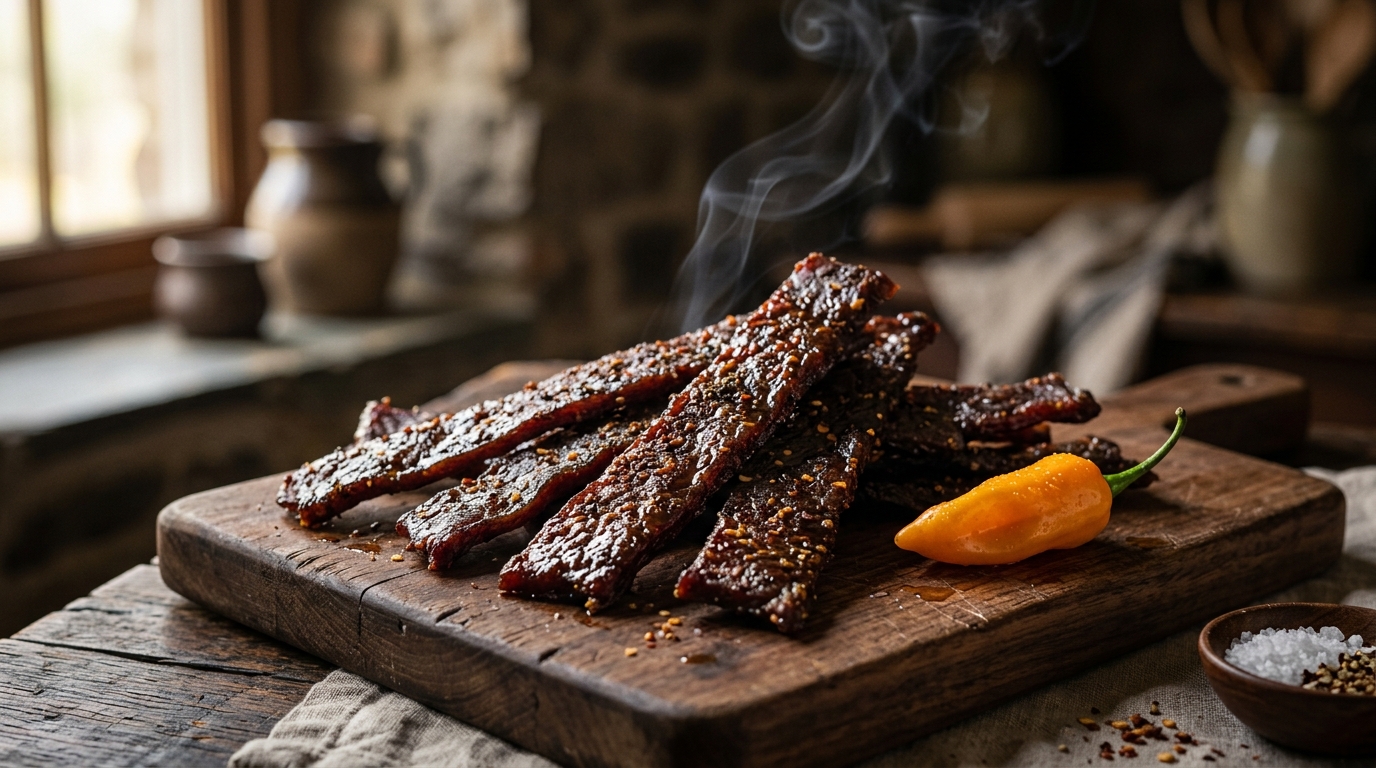
If you’ve spent any time around St. Augustine, you already know the datil — Florida’s worst-kept culinary secret. It’s a little golden pepper that punches at habanero weight but tastes like it’s smiling at you: fruity, almost honeyed, with heat that builds instead of ambushes.
In this recipe, we put that pepper to work in a batch of slow-smoked beef jerky. You’ll learn exactly how to make datil pepper beef jerky on a lump charcoal smoker — from slicing the beef and balancing the cure, to dialing the heat to your liking and nailing the texture. It’s one of the most addictive things we’ve smoked for the Sous Samonas kitchen — and it’s easier than you’d think.
What Is a Datil Pepper? (Florida’s Fiery Secret)
The datil is a small, conical chili grown almost exclusively in St. Augustine, Florida. It belongs to the same species (Capsicum chinense) as the habanero, scotch bonnet, and ghost pepper — but it carries a distinct fruity, floral sweetness that sets it apart from its brawling cousins.
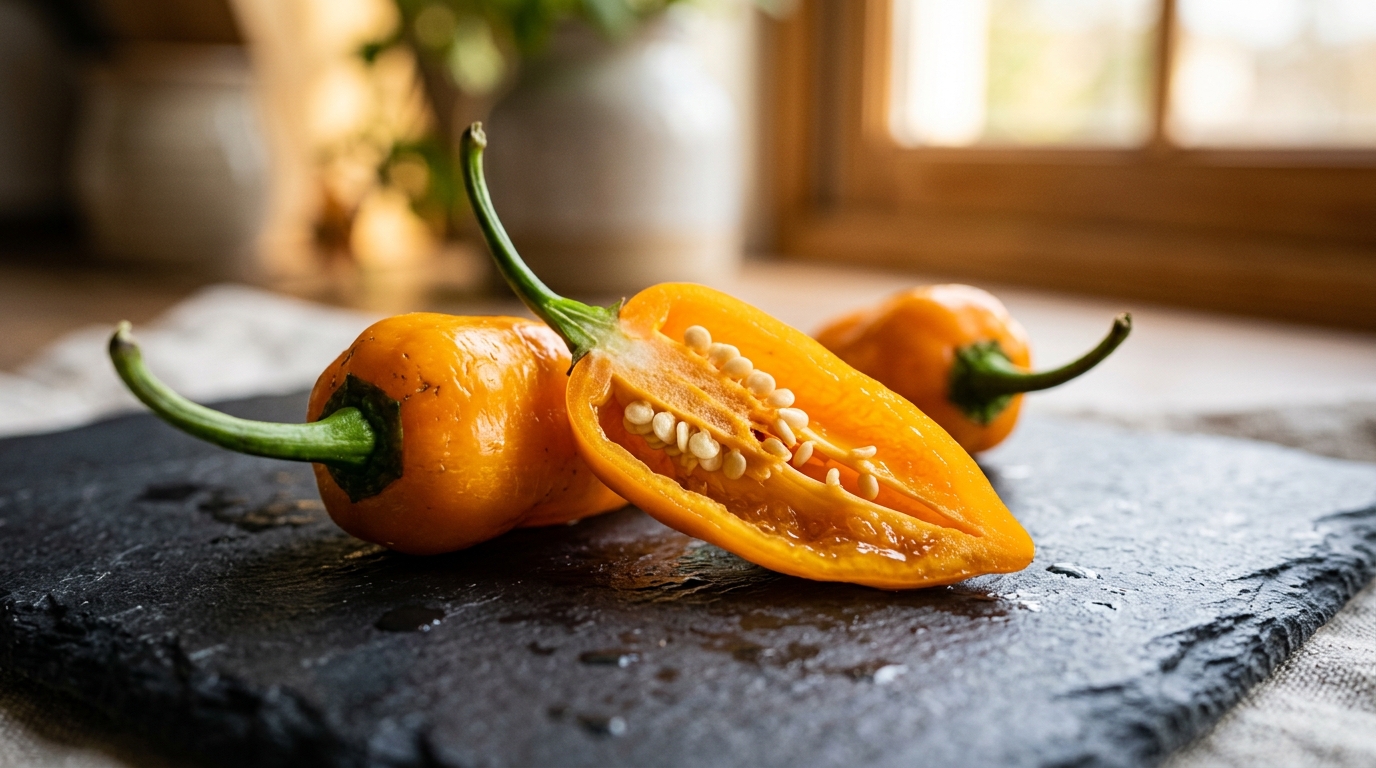
Here’s where it lands on the heat scale:
- Datil pepper: 100,000–300,000 Scoville Heat Units (SHU)
- Jalapeño: ~2,500–8,000 SHU — the datil can be up to 60x hotter
- Cayenne: ~30,000–50,000 SHU — datil is roughly 3–5x hotter
- Habanero / Scotch bonnet: ~100,000–350,000 SHU — basically a tie
- Ghost pepper: ~800,000–1,000,000+ SHU — in another league entirely
Translation: the datil brings serious heat, but the kind you’ll want a second piece of. That fruity sweetness is exactly what plays off smoked beef like it was born to.
Why This Datil Pepper Jerky Recipe Works
- The datil does double duty — heat and fruity sweetness, so you don’t need as much added sugar to balance it.
- Bottom round is the perfect cut — lean, affordable, and store-sliced at Walmart, so there’s no knife work required.
- Low-and-slow charcoal smoke layers in a depth that a dehydrator simply can’t match.
Ingredients for Datil Pepper Beef Jerky
Makes about 1 lb of finished jerky from 2.7 lbs of raw beef.
- 2.7 lbs bottom round, sliced thin (Walmart’s pre-sliced works great)
- ⅔ cup soy sauce — the salty, savory backbone
- ¼ cup (4 tbsp) Worcestershire sauce — tang and umami depth
- 1½ tsp datil pepper powder — now carries all the heat
- 1 tsp neutral oil — to bloom the datil powder so the heat spreads evenly
- 2 tbsp brown sugar + 1 tbsp honey — echoes the datil’s natural sweetness and builds a light bark
- 1 tbsp cider or white vinegar (optional) — brightness in place of the hot sauce’s tang
- ½ tsp Prague Powder #1 (cure — level, never more) — for safety and that classic cured color
- 2 tsp coarse black pepper
- 1½ tsp each garlic powder and onion powder
- 1 tsp MSG — rounds out the savory notes
- ½ tsp smoked paprika (optional, for color)
How to Make Datil Pepper Beef Jerky on a Charcoal Smoker
Step 1: Prep and trim the beef
Pat the slices dry and trim every bit of visible fat — fat won’t dry out and will shorten your jerky’s shelf life. Slice to a uniform thickness; even slices are the single biggest fix for unevenly seasoned jerky. For chewier jerky, slice with the grain; for more tender bites, slice against it.
Step 2: Build the marinade
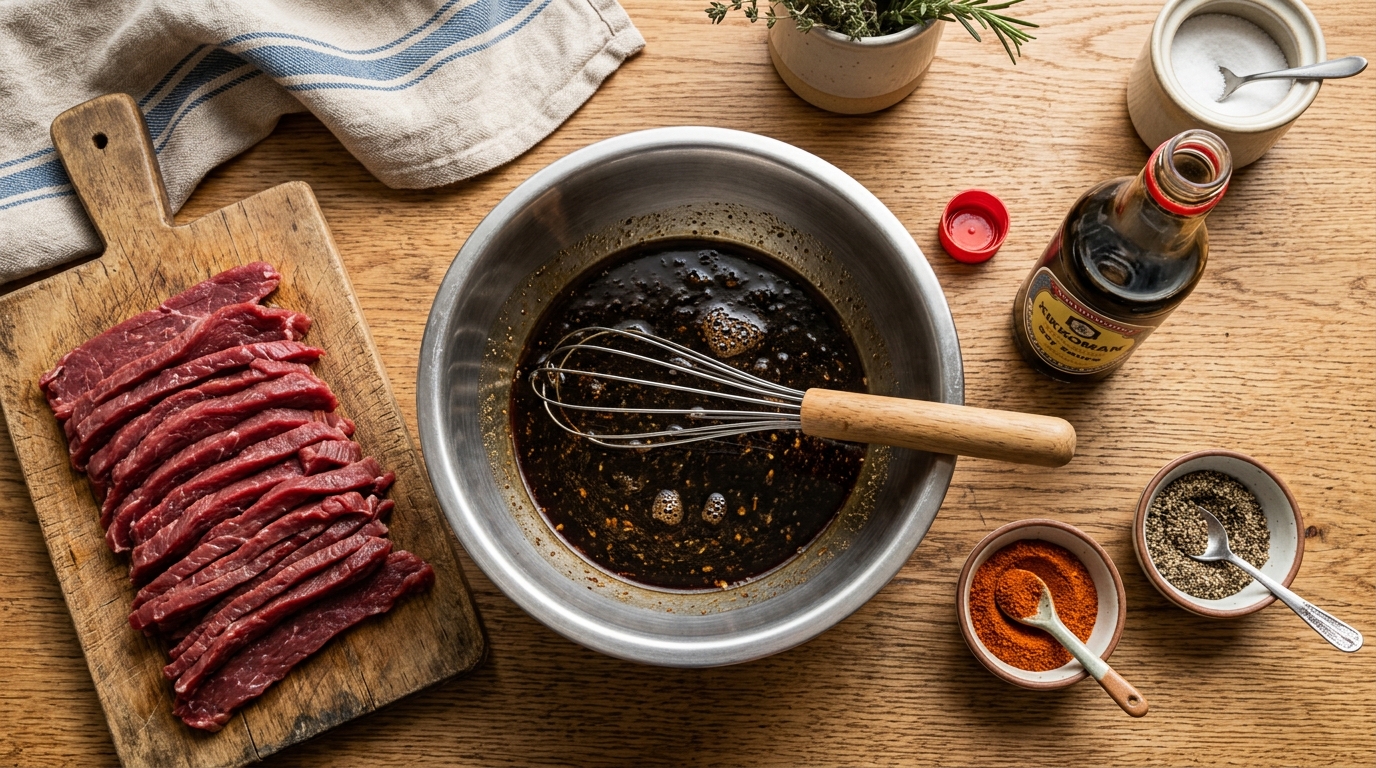
First, bloom the datil powder: stir it into the neutral oil to make a loose paste. Datil heat is oil-soluble, so this disperses it evenly instead of letting the powder cling to random pieces. In a saucepan over low heat, gently warm the soy sauce, Worcestershire, brown sugar, honey, and optional vinegar just until the sugar dissolves — do not boil, which would concentrate the marinade and drive off the Worcestershire and datil aromatics. Stir in the black pepper, garlic powder, onion powder, MSG, smoked paprika, and the bloomed datil-oil. Cool the marinade completely, then whisk in the Prague Powder #1 — never add cure to hot liquid, and even distribution of the cure is a food-safety point, not just flavor.
Step 3: Marinate
Add the beef, massage so every slice is coated, and pack it into a zip-top bag with the air pressed out (or vacuum-seal). Lay it flat in the fridge for 12–24 hours, flipping and re-shaking the bag every few hours so any resettled powder redistributes and no piece sits dry on top. Longer means deeper datil heat and better cure penetration.
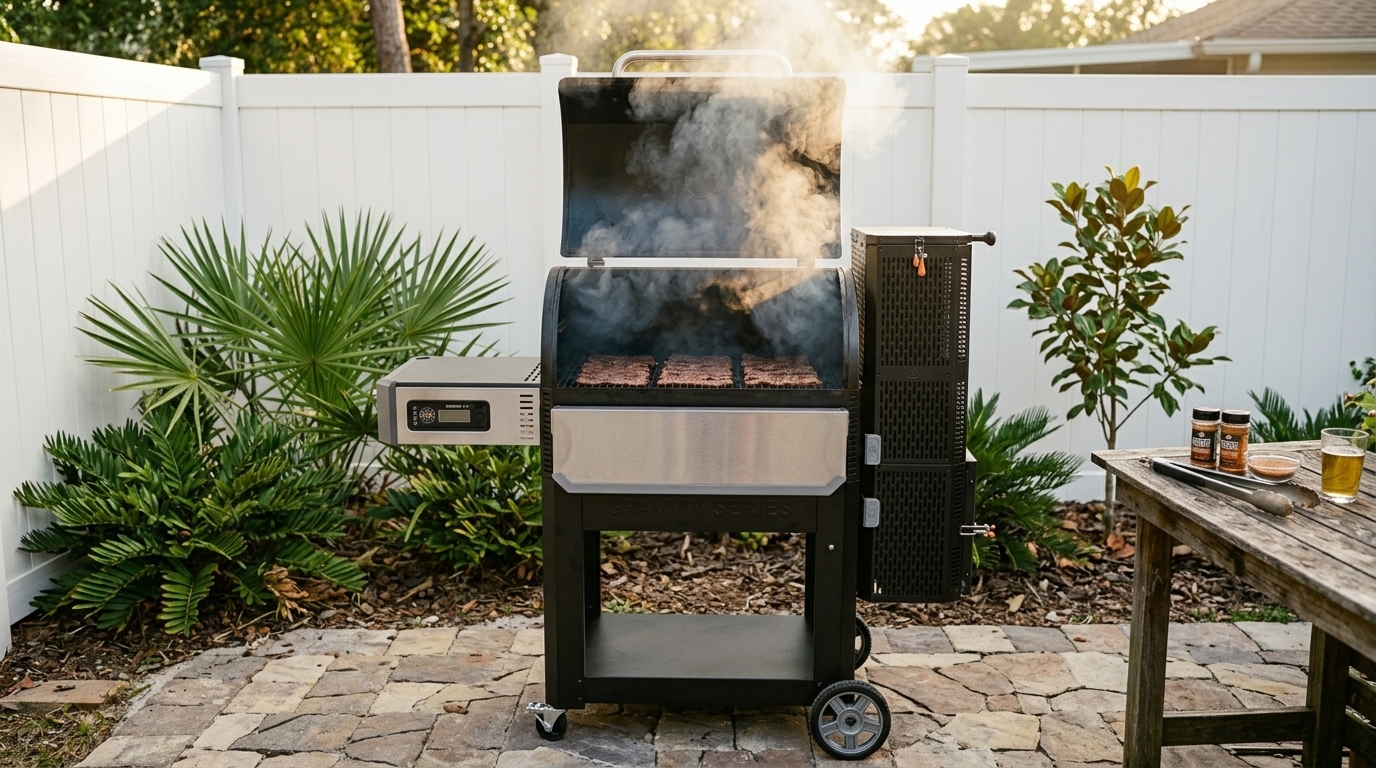
Step 4: Set up your charcoal smoker
Light a modest amount of lump charcoal and set up for low, indirect heat targeting 165–175°F. Add a couple chunks of a mild wood like oak or pecan. Avoid heavy mesquite — it’ll bury the datil’s fruitiness.
Step 5: Smoke low and slow
Pat the excess, pooled marinade off each slice so none is over-seasoned, then lay them in a single layer on the grates, not touching. Optionally dust with a little reserved dry spice for even surface coverage. Smoke at 165–175°F for 3–5 hours. For USDA-safe jerky, the beef should reach 160°F internally at some point — a smoker held steady in this range handles that. If yours runs cooler, finish the batch in a 175°F oven for 10–15 minutes.
Step 6: The bend test
Your jerky is done when a cooled piece bends and cracks but does not snap in two, with no wet spots remaining.
Pro Tips from the Kitchen
- Skip mesquite. Oak or pecan lets the datil’s fruitiness shine.
- Trim ruthlessly. Any fat left on the meat is the first thing to spoil.
- Cool before judging texture. Warm jerky always feels softer than it is.
- Weigh your cure if you can. ½ tsp of Prague Powder #1 is the safe amount for this batch — never round up.
How to Dial the Heat Up or Down
- Milder: drop the datil powder to 1¼ tsp.
- As written: 1½ tsp datil powder (no sauce) is solidly hot but enjoyable.
- Serious heat: push the datil powder to 2 tsp.
- Fresh option: swap the powder for 4–6 fresh datils, seeds in, blended into the marinade (wear gloves).
Do You Need Curing Salt for Jerky?
For smoked jerky made at low temperatures, yes — curing salt (Prague Powder #1) is strongly recommended. It protects against bacteria during the long, low-temperature dry and gives jerky its signature color and tang. Use exactly ½ teaspoon for this 2.7 lb batch, distributed evenly, and never exceed the recommended amount.
How to Store Homemade Beef Jerky
Cool the jerky completely, then store it airtight. Properly cured and fully dried jerky will keep for several weeks refrigerated or for months in the freezer. For longer storage or gifting, toss an oxygen absorber into the container or vacuum-seal it.
Frequently Asked Questions
How hot is datil pepper beef jerky?
With 1½ tsp of datil powder across 2.7 lbs of beef, it lands in the noticeably spicy but very enjoyable range — closer to a hot wing than a punishment. You can adjust it easily (see the heat dial above).
Where can I buy datil peppers or datil hot sauce?
Datils are grown mainly in St. Augustine, Florida. Fresh pods turn up at local farmers’ markets, and bottled datil hot sauces and powders ship nationwide from several St. Augustine makers.
Can I make this jerky in a dehydrator or oven instead?
Yes. Dry at 160–175°F until the bend test passes. You’ll lose the charcoal smoke flavor, but the marinade and datil heat still shine. A few drops of liquid smoke can help bridge the gap.
What’s the best cut of beef for jerky?
Lean cuts work best. Bottom round, top round, and eye of round are all excellent — they’re lean, affordable, and slice cleanly.
How long does homemade jerky last?
Several weeks refrigerated, or months frozen, when fully dried and cured. Always store it airtight.
Make a Batch and Tag Us
Florida heat, smoked low and slow — that’s the Sous Samonas way. Made a batch of datil pepper beef jerky? Tag @SousSamonas and show off your smoke ring — we love featuring your cooks.
 Sous Samonas
Leave a comment